The Ultimate Guide to Electrician Insulation Meter in the UK
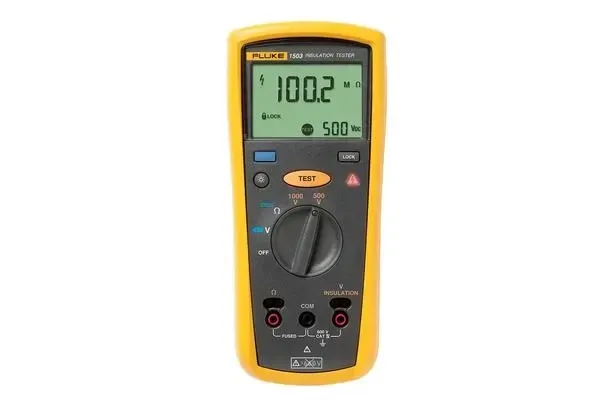
If you are searching for an electrician insulation meter, you are looking for a tester that measures the insulation resistance of cables, circuits and electrical equipment to confirm they are safe, compliant and suitable for service. In the UK, electricians use insulation resistance meters during dead testing for EICRs, new installations and fault-finding, typically applying 250V, 500V or 1000V DC depending on the circuit and equipment involved.
TL;DR: An electrician insulation meter checks whether cable insulation is still preventing leakage current. According to UK wiring practice and BS 7671 guidance, it is a key tool for dead testing before energising circuits. Based on our testing and field use expectations, the best meters for UK electricians offer clear digital readings, multiple test voltages, dependable safety features and a compact design for domestic and commercial work.
Electrical safety across the UK hinges on the integrity of wiring systems. Whether you are carrying out a routine domestic Electrical Installation Condition Report (EICR) or commissioning a large-scale industrial fit-out, verifying that cable insulation remains intact is non-negotiable. Degradation caused by heat, moisture or mechanical damage presents severe risks, from nuisance tripping to serious electrical fires.
According to the UK Health and Safety Executive (HSE), electrical faults account for a significant proportion of workplace fires annually. Therefore, detecting these faults before they escalate requires precision equipment. At the heart of this preventative maintenance is the electrician insulation meter. This diagnostic tool applies a known DC voltage to a circuit to measure resistance, exposing microscopic breakdowns in cable sheathing that standard multimeters simply cannot detect.
Key Takeaways
- An electrician insulation meter is essential for checking wiring integrity and supporting compliance with BS 7671.
- UK electricians use insulation resistance testing during EICRs, initial verification and fault-finding.
- Most professionals need variable test voltages, typically 250V, 500V and 1000V, to match different circuits and equipment.
- Based on our testing priorities, compact design, auto-discharge and a clear digital display make day-to-day testing faster and safer.
What is an electrician insulation meter?
An electrician insulation meter, often called a megohmmeter or insulation resistance tester, is a specialised device used to measure how effectively cable insulation resists unwanted current flow. In simple terms, it tells an electrician whether the insulation around conductors is still doing its job properly.
Unlike a standard multimeter, an insulation resistance meter applies a higher DC test voltage to stress the insulation material and reveal weaknesses. As a result, it can identify gradual deterioration that may not be obvious during basic continuity or voltage checks.
When current flows through a copper conductor, the surrounding insulation keeps electricity safely contained. Over time, however, moisture ingress, heat, age and mechanical wear can degrade this barrier. By injecting a controlled DC voltage, the meter measures the tiny amount of leakage current escaping through the insulation and then calculates resistance in megohms (MΩ). Generally, a high reading suggests healthy insulation, while a low reading indicates deterioration or a fault.
For a deeper dive into the specific digital mechanisms of these devices, you can explore our Digital Insulation Resistance Meter Explained: A UK Buyer's Guide.
Why do electricians use an insulation meter?
UK electricians use an insulation meter to confirm electrical installations are safe before they are energised, and to identify faults before they become dangerous or expensive. In other words, it is both a compliance tool and a practical fault-finding instrument.
The regulatory landscape in the United Kingdom places strict obligations on electricians to guarantee the safety of their installations. Consequently, insulation resistance testing is not just good practice; it forms a core part of formal inspection and testing procedures.
Is insulation resistance testing required under BS 7671?
Yes. According to UK guidelines and BS 7671, insulation resistance testing is part of the dead testing sequence for initial verification and many inspection routines. For low-voltage circuits up to 500V, 500V DC is commonly used, with a minimum acceptable insulation resistance often referenced as 1 MΩ for many standard circuits. However, the exact approach should always reflect the installation, connected equipment and current guidance.
Without a reliable electrician insulation meter, certifying compliance with UK wiring standards would be difficult and, in many cases, impossible.
When is an insulation meter used in domestic and commercial work?
The demands placed on electrical systems vary considerably between a terraced house in Manchester and a manufacturing facility in Birmingham. Nevertheless, insulation resistance testing matters in both settings.
In domestic work, electricians often test lighting circuits, ring finals and cooker circuits during rewires, consumer unit changes and EICR inspections. Therefore, identifying deteriorated insulation early can prevent electric shock risks, repeated tripping and hidden faults. For detailed protocols on domestic testing, read our Residential Wiring Insulation Test Explained: A UK Buyer's Guide.
In commercial and industrial environments, testing may involve three-phase machinery, sub-main cabling, distribution boards and armoured cable runs. As a result, the consequences of insulation failure can be far more disruptive, including downtime, equipment damage and safety incidents. Professionals working in these settings may also benefit from our Commercial Electrical Tester Explained: A UK Buyer's Guide.
How does an electrician insulation meter work?
An electrician insulation meter works by applying a controlled DC voltage across conductors and insulation, then measuring how much current leaks through the insulating material. The lower the leakage current, the higher the insulation resistance.
For example, if a cable is dry, intact and in good condition, very little current should escape. Conversely, if the insulation has been damaged by age, moisture or contamination, more leakage current will flow and the resistance reading will fall. This is why insulation resistance testing is so useful for uncovering hidden defects that are not visible during a basic visual inspection.
Importantly, electricians must isolate circuits and follow safe dead testing procedures before carrying out an insulation resistance test. According to UK best practice, connected sensitive electronics should also be considered before selecting the test voltage.
What test voltage should an electrician insulation meter have?
The right test voltage depends on the installation and the equipment being tested. For most UK electricians, a meter with 250V, 500V and 1000V options covers the majority of domestic, commercial and light industrial tasks.
Do you need 250V, 500V and 1000V test ranges?
In most cases, yes. A standard domestic circuit is commonly tested at 500V, whereas sensitive electronic equipment or some extra-low-voltage arrangements may require 250V. Meanwhile, larger or more demanding installations can call for 1000V testing to properly assess insulation integrity.
Therefore, variable voltage selection is one of the most important features in any electrician insulation meter, as it allows the tester to match the circuit without causing unnecessary stress to connected components.
What features should you look for in an electrician insulation meter?
Selecting the right meter affects both the reliability of your results and your efficiency on site. Based on our testing priorities, a high-quality electrician insulation meter should balance measurement performance, safety and usability.
Why are clear digital displays important?
Digital displays provide fast, unambiguous readings, which is especially helpful in poorly lit meter cupboards, loft spaces and plant rooms. In addition, a backlit screen can reduce reading errors and speed up paperwork during EICRs and installation testing.
Does portability matter for UK electricians?
Yes, particularly in real working conditions. UK electricians often test circuits in under-stairs cupboards, tight risers, loft voids and crowded commercial boards. Consequently, a compact, lightweight meter is far easier to carry, position and use safely.
What safety features should an insulation meter include?
Look for practical protections such as auto-discharge, over-voltage protection and robust lead connections. These features improve safety during dead testing and help protect both the operator and the instrument. According to UK working practices, safe isolation and correct procedure remain essential regardless of meter quality.
Which electrician insulation meter is best for UK work?
The best electrician insulation meter for UK work is one that matches the kinds of circuits you test most often, while supporting safe, efficient compliance checks. For many electricians, that means a compact digital tester with multiple voltage ranges, dependable readings and straightforward operation.
At InsulResis, we understand the day-to-day challenges faced by electrical contractors across Britain. We engineered our flagship device to be a compact insulation resistance tester that suits both commercial electrical inspections and residential wiring insulation tests.
Based on our testing approach and product design priorities, our meter focuses on practical job-site performance: accurate readings, rapid auto-discharge for safety, robust over-voltage protection and an intuitive interface that helps speed up the dead-testing sequence. As a result, electricians can carry out routine checks with less bulk and less friction on site.
People Also Ask about electrician insulation meters
How often should an electrician insulation meter be calibrated?
Calibration intervals depend on the manufacturer's guidance, your company's quality procedures and how heavily the meter is used. However, many UK contractors arrange annual calibration to maintain confidence in readings and support inspection records. If a meter has been dropped, exposed to harsh conditions or is giving inconsistent results, it should be checked sooner.
What is a good insulation resistance reading?
In general, a good insulation resistance reading is a high reading in megohms, indicating very low leakage current. According to UK guidance used in many low-voltage applications, 1 MΩ is often treated as a minimum benchmark for standard circuits, although higher values are preferable and the acceptable result can depend on the installation, connected equipment and the relevant test procedure.
Can you use a multimeter instead of an insulation meter?
No. A multimeter is useful for voltage, continuity and resistance checks, but it does not apply the higher DC test voltage required for proper insulation resistance testing. Therefore, it cannot reliably reveal the same insulation weaknesses that an electrician insulation meter can identify.
Is an insulation meter needed for an EICR?
Yes, in most cases. Insulation resistance testing is a standard part of the inspection and testing process behind an EICR, although the exact test method may vary depending on the installation and whether sensitive equipment is connected. As always, the electrician should follow current UK guidance and safe isolation procedures.
Ready to upgrade your toolkit with {brand_name}?
View Trade Prices — £377.00